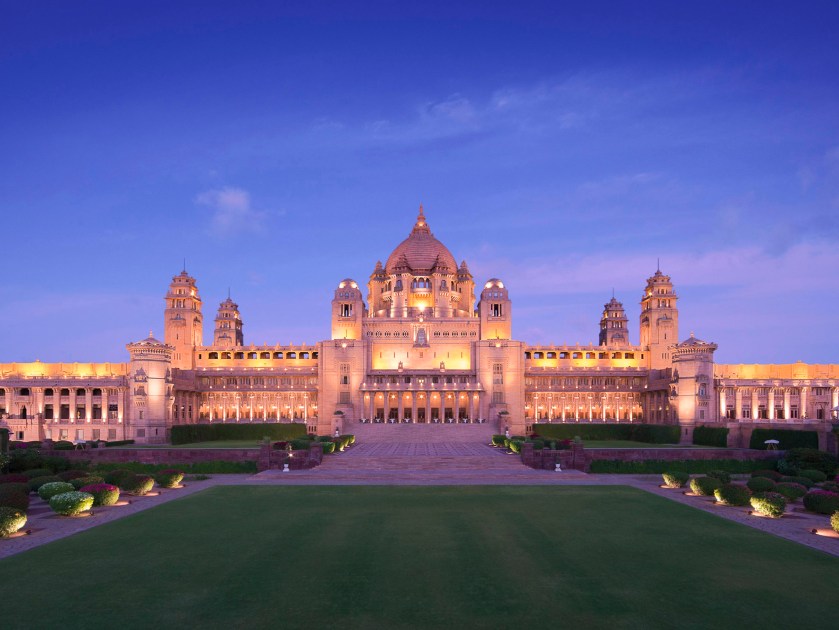
Jodhpur is a city located in the state of Rajasthan, the state is popularly know as Thar Desert and a city from where I belong to. This place is a popular tourist destination, is also known as Blue city and Sun city all over India. The old city circles, the fort which is bounded by a wall with several gates.
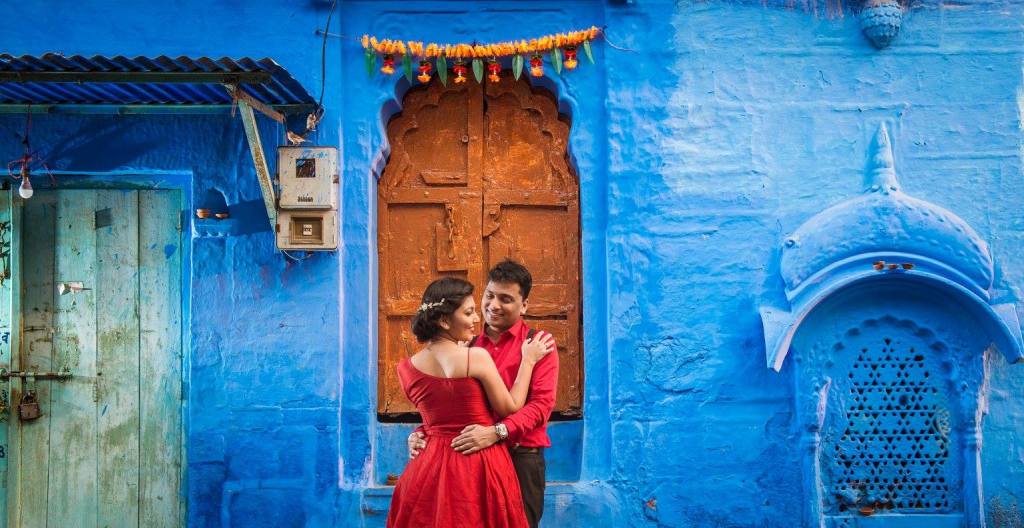
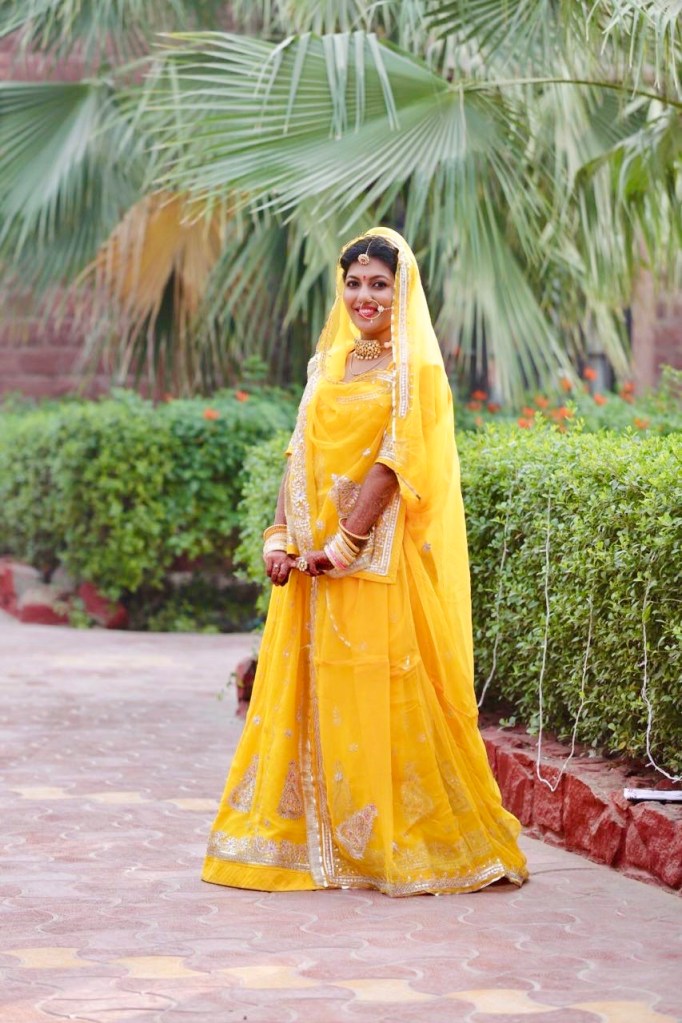
Culture : The Jodhpuri people are amongst the most hospitable people of India. They have a typical Marwari accent. The lifestyle in city is quite fascinating. The folks here wear nice and lovely multihued costumes. The women folk wear wide gathered skirts and a hip length jacket, with three quarter length sleeves, covering the front and back. Women here loves to wear jewelry on most of the parts of their body. They particularly like to wear specific type of jewelry like the ones worn on the feet, head, forehead, ear, nose, neck, arms, wrist, fingers, waist, etc.

Another one of the unique features of the culture of Jodhpur and all over Rajasthan is the colorful turbans worn by men. The popular tight-horse riding trousers, which have ballon like expansion on upper part of pant and from knee length to the bottom the pant is stiched narrow tight fitting and the pant is popularly know as ‘Jodhpuri’s’. The pant is named after the city name. The main languages spoken here are Hindi, Marwari and Rajasthani.
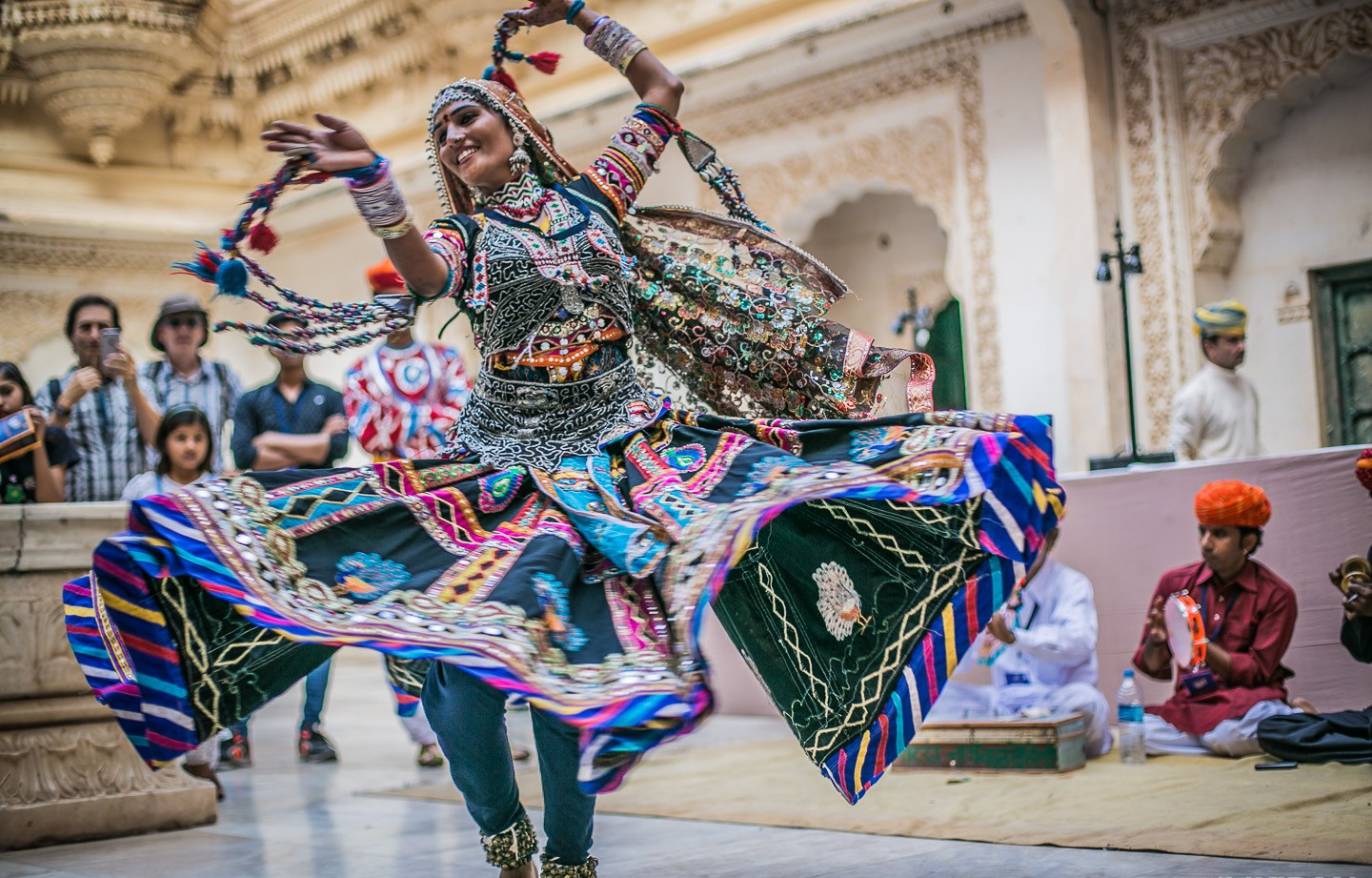
Music and dance also form an important part of their culture, performed during festive and religious occasions. ‘Chari dance’ and ‘ghoomar’ are popular dance forms.
Famous Food of Jodhpur, Rajasthan
Umaid Bhawan Palace
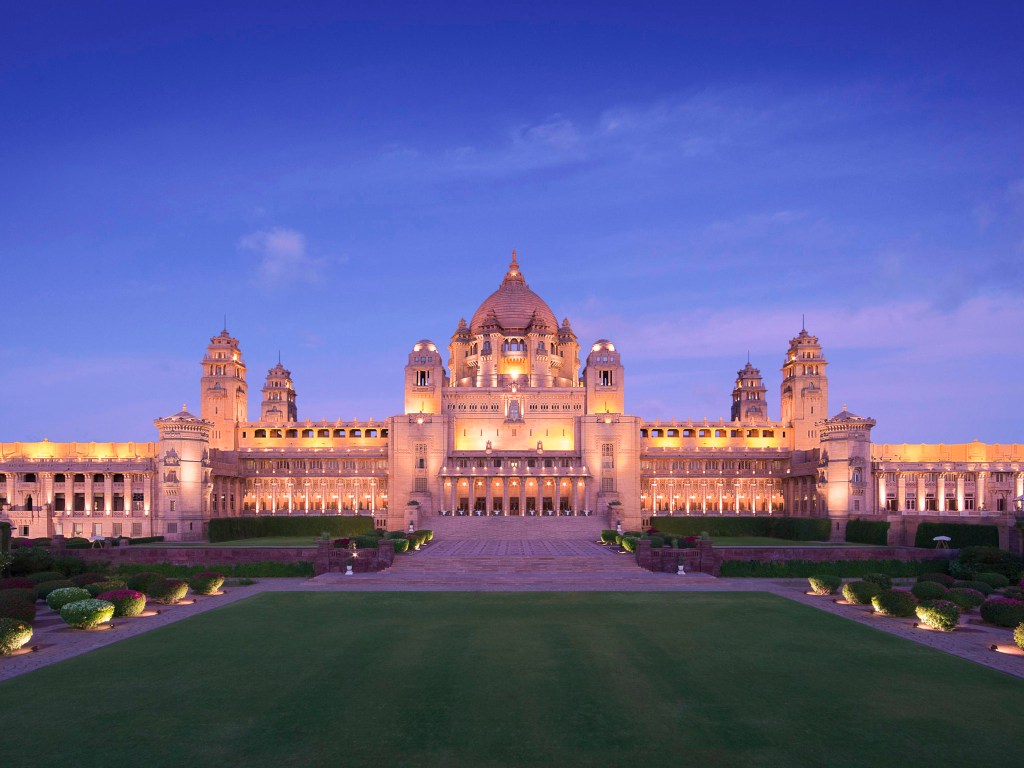
Gaj Singh II still lives in part of this hilltop palace, built in 1929 for Maharaja Umaid Singh. It was designed by the British architect Henry Lanchester and took more than 3000 workers 15 years to complete its 347 rooms. Umaid Bhawan Palace was awarded as the World’s best hotel at the Traveller’s Choice Award, which was organized by TripAdvisor. This place is famous for destination wedding of many celebraties. The place is divided in three parts, one is a private residence of Gaj Singh Ji. Other part is run by Taj group of hotels and lastly the third part has a museum in it.
The museum is open from 9am to 5pm, which has entry fee of ₹50 for Indian & ₹100 foreigner, which includes photos of the elegant art-deco interior plus an eccentric collection of elaborate clocks, is the only part open to casual visitors.
The hotel wing of the palace is run by the Taj Group of Hotels and is called the ‘Taj Umaid Bhawan Palace Jodhpur
Mehrangarh Fort

Mehrangarh is one of the most magnificent forts in India. Built in around 1459 by Rao Jodha, the fort is situated 410 feet above the city and is enclosed by imposing thick walls. Still run by the Jodhpur royal family, Mehrangarh is packed with history of many legends.
We used to go fort early in the morning to see beautiful sunrise. It has beautiful view in the morning from both back(Fateh Pol) and Main entrance of the door.
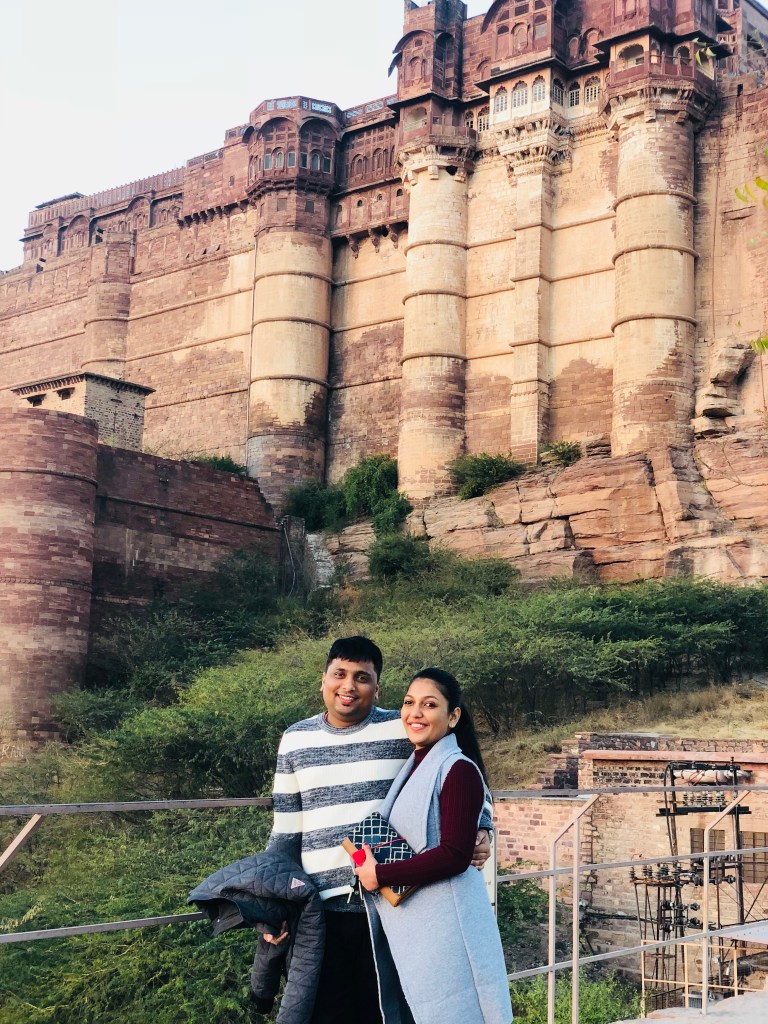
Mehrangarh’s main entrance is at the northeast gate, Jai Pol. It’s about a 300m walk up from the old city to the entrance, or you can take a winding 5km autorickshaw ride (around ₹120).

Jai Pol was built by Maharaja Man Singh in 1808 following his defeat of invading forces from Jaipur. There is museum ticket office and a small cafe, the 16th-century. Dodh Kangra Pol was an external gate before Jai Pol was built, and still bears the scars of 1808 cannonball hits. Through here, the main route heads up to the left through the 16th-century Imritia Pol and then Loha Pol, the fort’s original entrance, with iron spikes to deter enemy elephants.
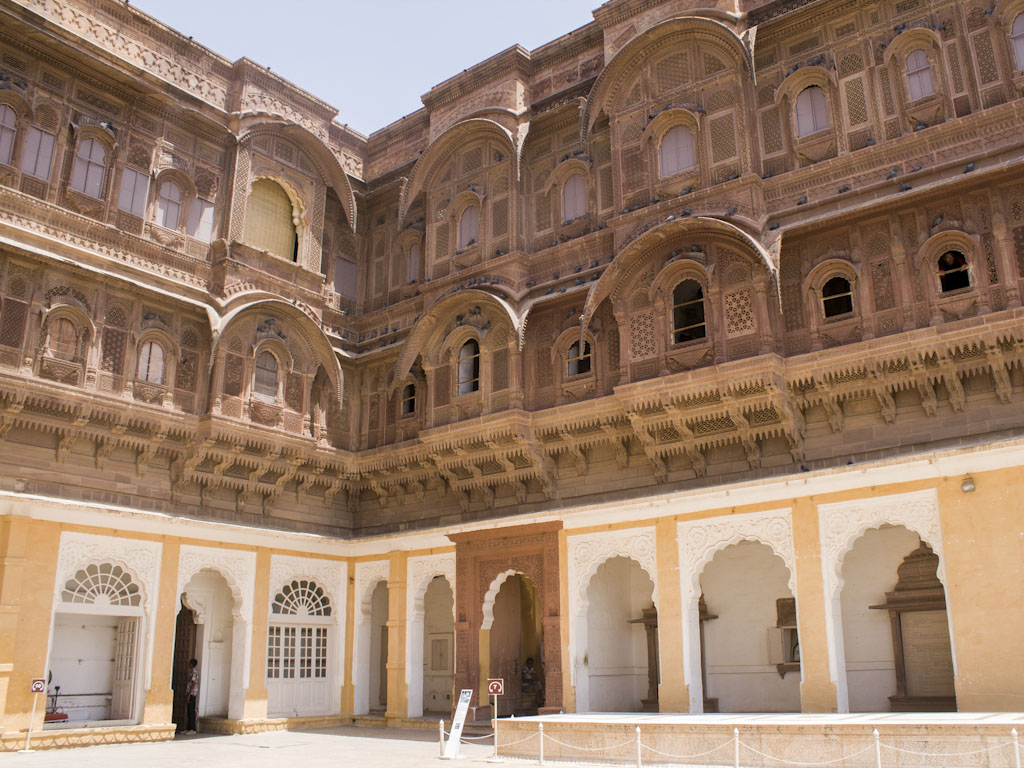

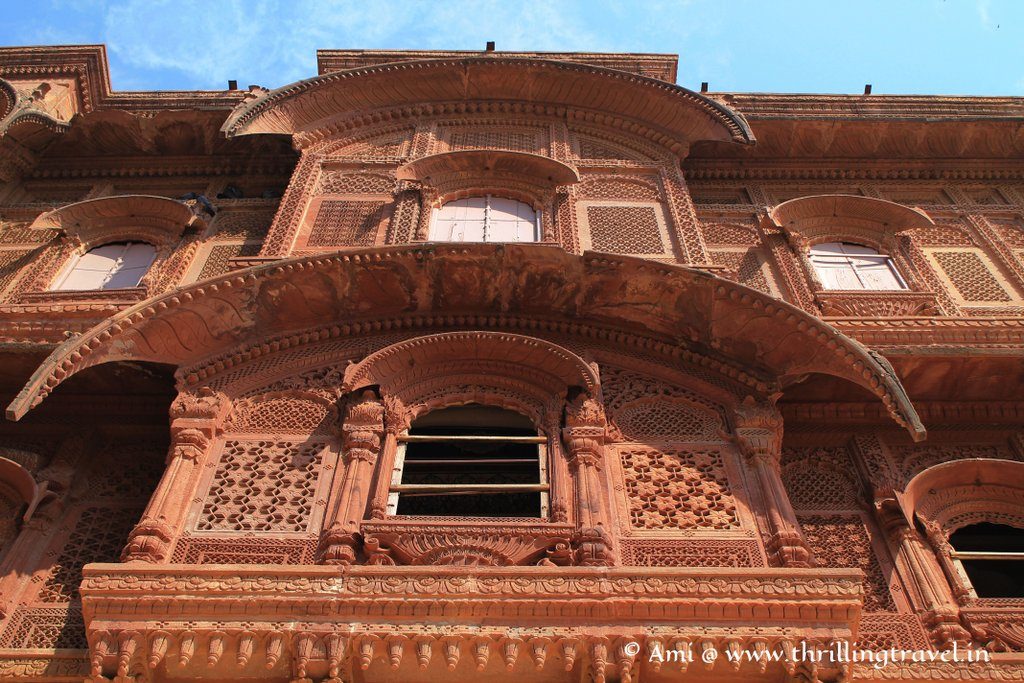
Past Loha Pol you’ll find a restaurant and Suraj Pol, which gives access to the museum(you need to buy ticket to visit museum) where the galleries around Shringar Chowk display India’s best collection of howdahs (seat for carrying people on an elephant’s back) and Jodhpur’s royal palanquin collection, Daulat Khana Chowk displays textiles, paintings, manuscripts, headgear and the curved sword of the Mughal emperor Akbar, gallery of miniature paintings and other more things to see.
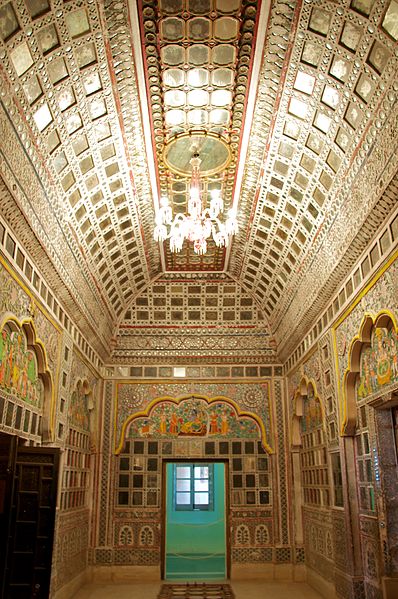
Once you’ve visited the museum, continue on from here to the panoramic ramparts, which are lined with impressive antique artillery.
Also worth exploring is the right turn from Jai Pol, where a path winds down to the Chokelao Bagh, a restored and gorgeously planted 18th-century Rajput garden (you could lose an afternoon here lolling under shady trees reading a book), and the Fateh Pol. You can exit here into the old city quarter of Navchokiya.
Activities : Go Zipling (Flying fox Tour)

Jaswant Thada
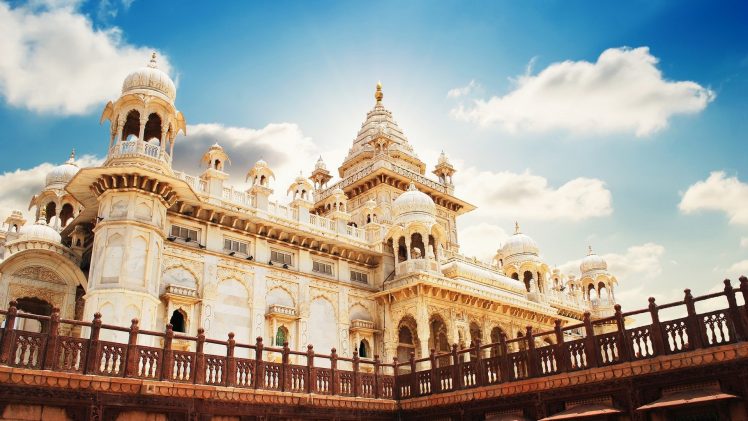
It was built by Maharaja Sardar Singh of Jodhpur in 1899 in memory of his father, Maharaja Jaswant Singh II, and serves as the cremation ground for the royal family of Marwar.
The mausoleum is built out of intricately carved sheets of marble. These sheets are extremely thin and polished so that they emit a warm glow when illuminated by the Sun.
- The entrance fees for this attraction is INR 15 for Indian Citizen and INR 30 for foreign citizens. For still camera INR 25 and for video INR 50.
- Jaswant Thada is open from 9 AM – 5 PM all day.
- Remember to open footwear before entering the cenotaph building.
Rao Jodha Desert Rock Park
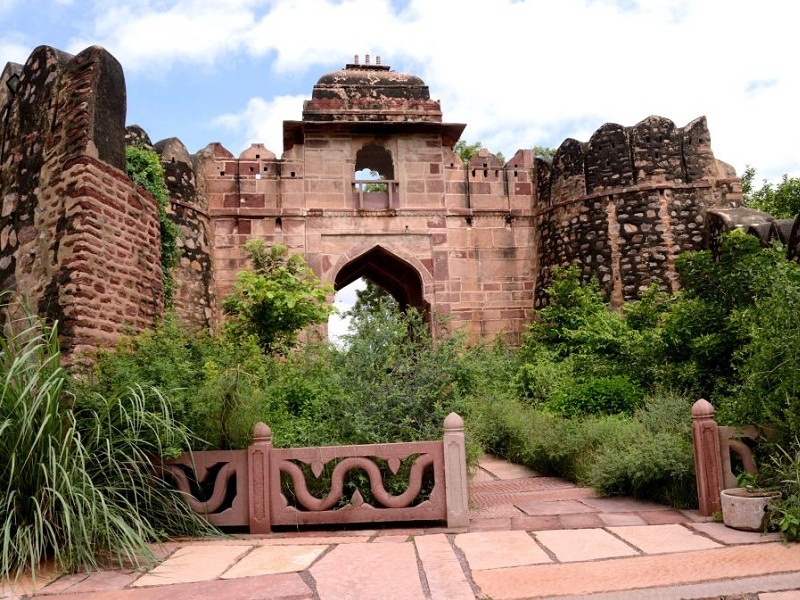
This 72-hectare park – and model of ecotourism – sits in the lee of Mehrangarh. It has been lovingly restored and planted with native species to show the natural diversity of the region. The park is criss-crossed with walking trails that take you up to the city walls, around Devkund lake, spotting local and migratory birds, butterflies and reptiles.
Clock Tower
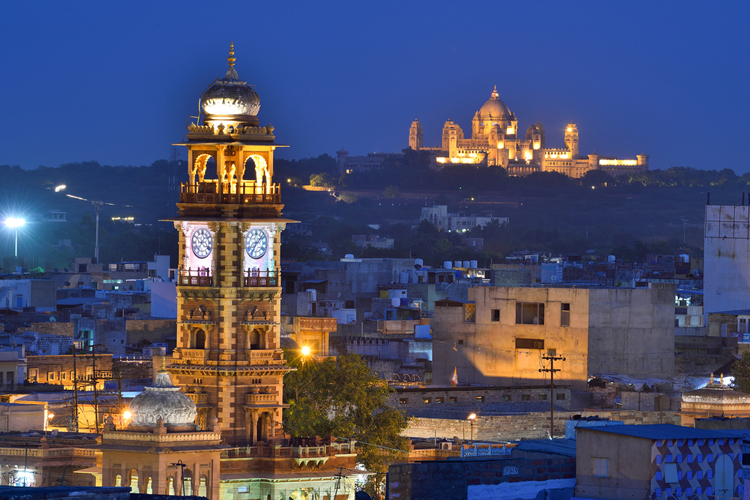
The century-old clock tower is a city landmark surrounded by the vibrant sounds, sights and Sardar Market. Sardar Market is frequently visited by tourists on shopping spree. From this market, tourists can purchase Rajasthani textiles, clay figurines, miniature, camels and elephants, marble inlay work and classic silver jewellery.
You can enjoy the beautiful view of clock tower and Mehrangarh Fort in evening. There are few heritage restaurant which give you such a pleasant view from their roof top. The Heritage Restaurant near clock tower are Pal Haveli, Raas Haveli, Panorama 360
Toorji Ka Jhalra

Toorji Ka Jhalra (Toorji’s Step Well) was built in Jodhpur the 1740s by a Queen, Maharaja Abhay Singh’s Consort, continuing an age old tradition that Royal women would build public water works.
This geometrically handsome step-well (also known as a baori or wav) has been rejuvenated after decades as a rubbish dump. It’s a great place to just sit and watch, and the attached cafe(Stepwell Cafe) adds further incentive for a visit.
Mandore (Ravana Temple in North-India)
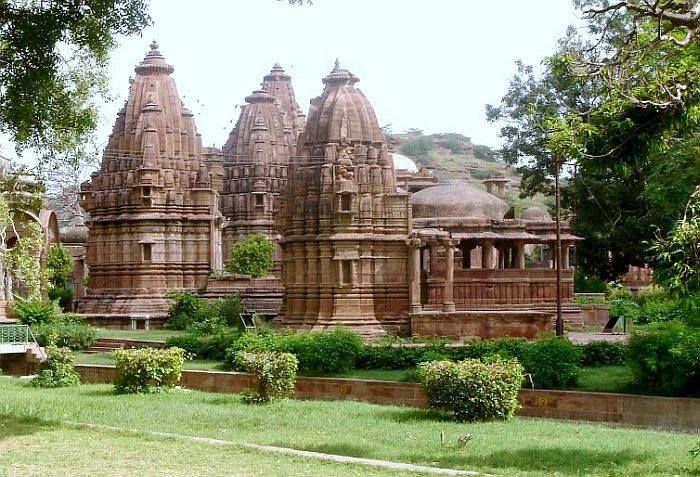
Mandor having various temple and charming gardens what it attracts the most is the temple of Ravana. The story goes something like this. The wife of Ravana, Mandodari is believed to be from this very town. What this means is that Ravana is son in law of the Mandore town.
The people of the town actually acknowledge this fact. There is a mysterious cave in Mandore which is believed to be gateway to hell. A lot of people have gone into this cave but failed to find its end.
According to the local legend, this cave is path to hell. They believe that Ravana came to the town from this very cave to marry Mandodari. A lot of people have tried to find the end point of the cave. Some came back after the oxygen level dropped while others could not find the way out and died.
This is why government of India has banned people from entering the cave. A special permission is required to enter the caves. However despite the ban, people who know about this place came to see the cave, even if they can’t enter it.
Coming back to the legend, after the marriage of Ravana, some of his relatives are said to have stayed back. You will still find people in Mandore who consider themselves to be descendents of Ravana which includes Maudgil Brahmins.
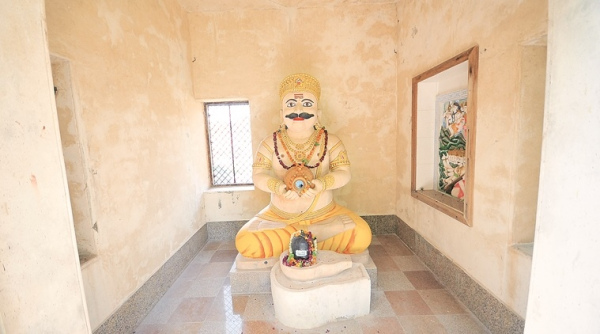
Panchkund Chattriya
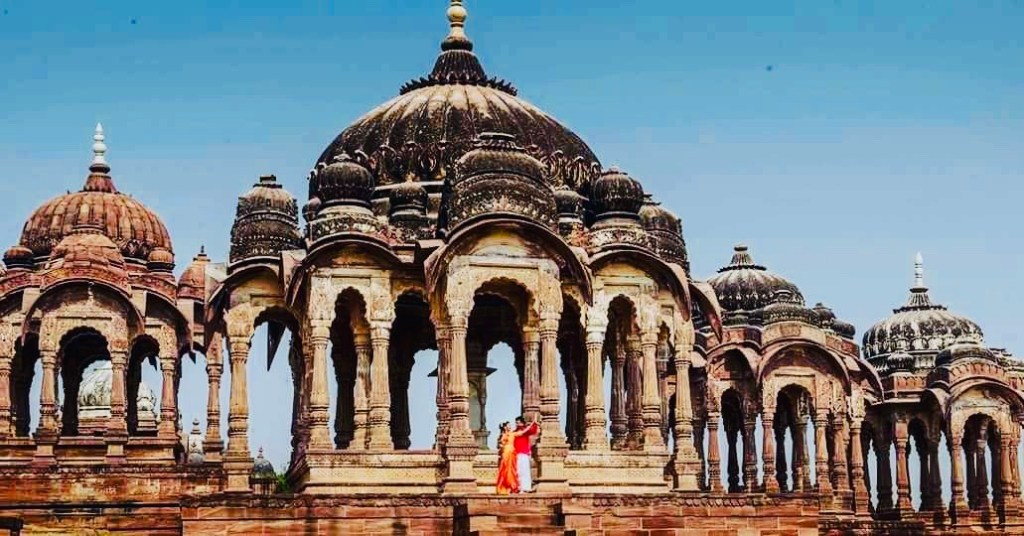
This places is less known by tourist, so it is less crowded. We had our pre wedding shoot here. This place is 5km away from Mandore.
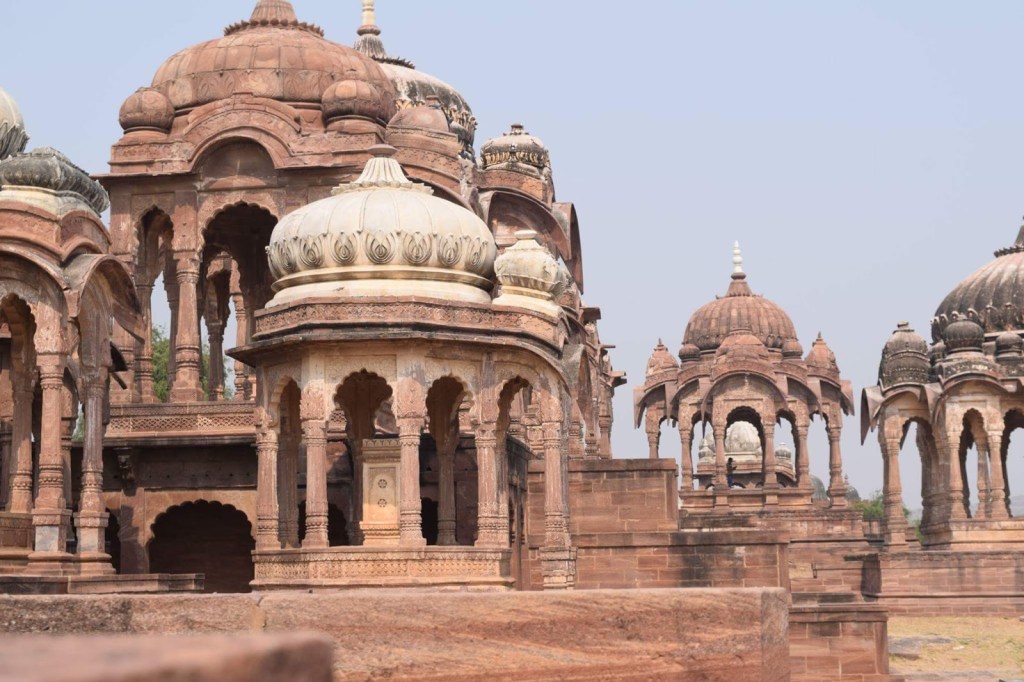
RoyalCenotaphs of all the royal chhatris or cenotaphs which were constructed out of dark-red sandstone, six stand out. The oldest ones belong to Raja Maldeo and Udai Singh constructed in the 16th century to the later ones of Sur Singh, Gaj Singh and Jaswant Singh I all built in the 17th century. However it is Ajit Singh’s cenotaph which was built circa 1724 which is the largest along with Jaswant Singh’s which was built around two score years earlier in 1681. Ajit Singh’s cenotaph in particular is a magnificent monument built as it is close-grained freestone.
Camping
The proximity of Jodhpur brings you close to Thar desert and here lies the camp in the oasis. This camp is located around 55 kms away from the city center and offers multiple amenities and activities to welcome their guests to let them enjoy a lavish stay. Golden sands are kissed by sun and stars while mesmerizing you with luxury and a gist of desert flavor.
NOTE: If you are planning to visit Rajasthan in month of September or October, then do attend RIFF.
Rajasthan International Folk Festival (RIFF)
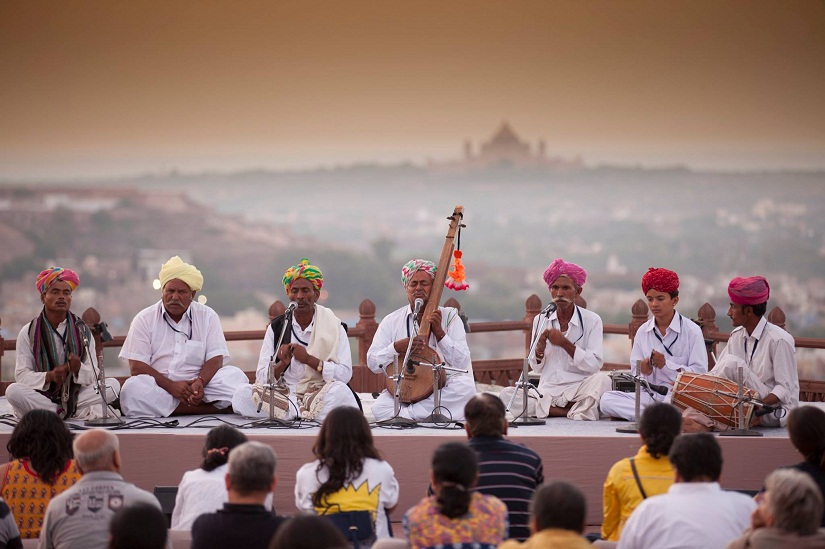
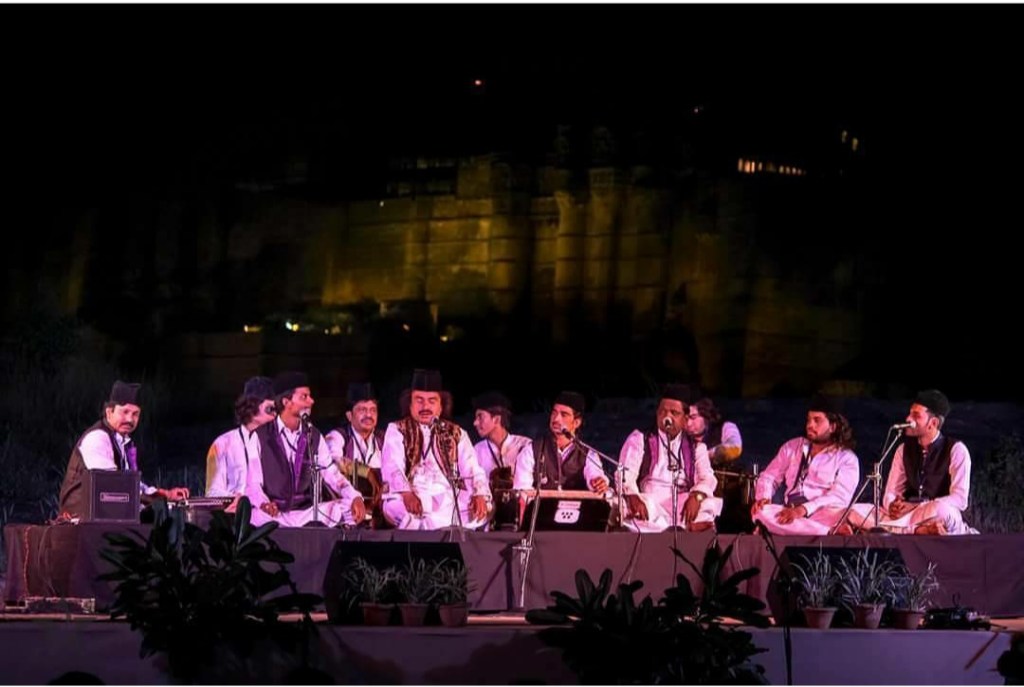
The excellent Rajasthan International Folk Festival, with five days of music concerts by Indian and international artists, is held at Mehrangarh Fort. Started in year 2007, under the international patronage of the Rolling Stones frontman, Mick Jagger and the invaluable aegis of H.H. Maharaja Gaj Singh Ji. Jodhpur RIFF is carefully curated to give you a unique experience of Rajasthani culture that does not find space in mainstream media. The magical touch of the festival is its timing, which coincides with the brightest full-moon in north India. RIFF gives the audience a rare opportunity to meet fascinating artists from various root traditions. Unearth the original Rajasthani culture where folk music communities sing in praise of their local deities and for healing.
 Zesty Soul
“Thank you so much for sharing all this wonderful info with the how-to’s!!!! It is so appreciated!!!”
LikeLike